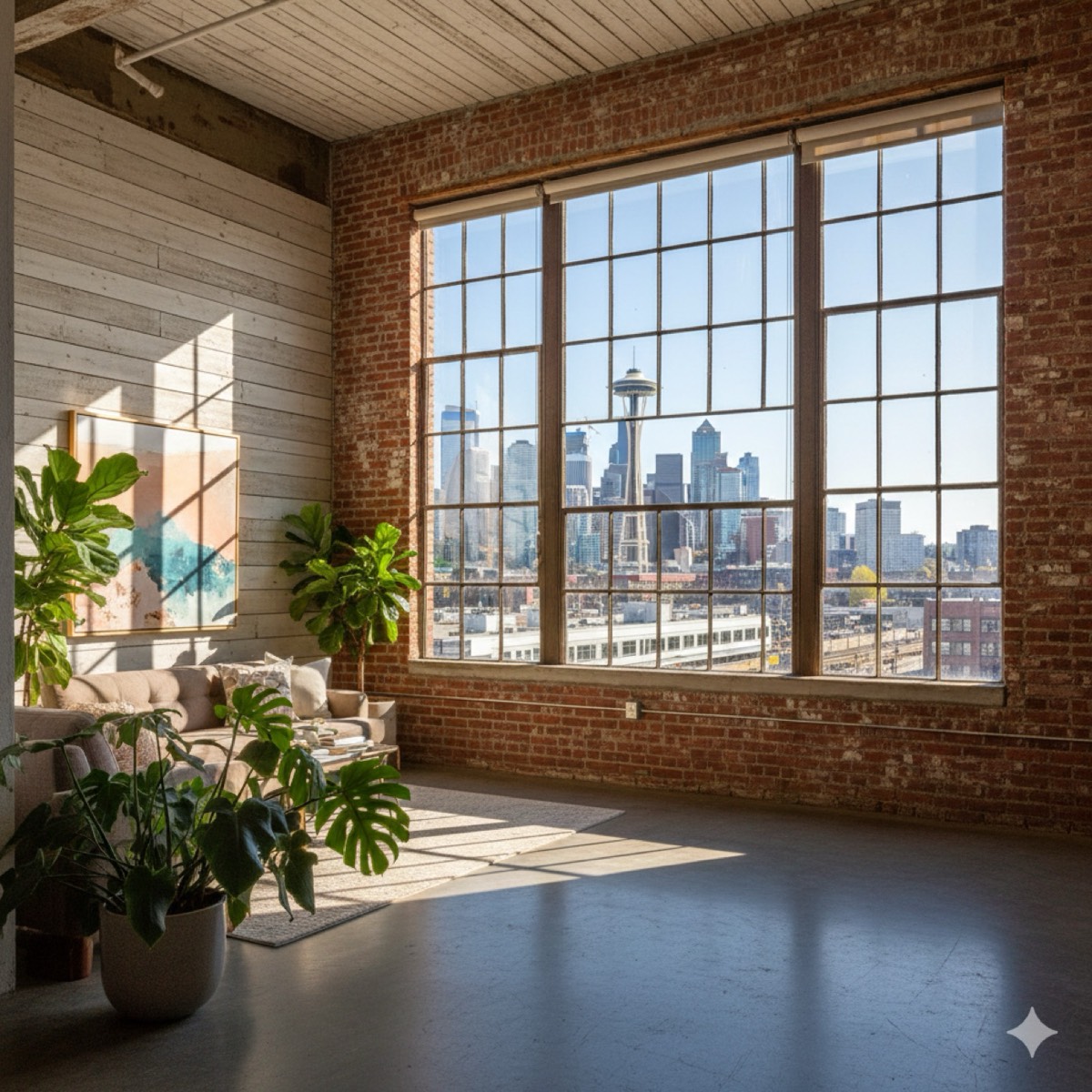
Home staging SODO Seattle lofts starts with an advantage most Seattle sellers would gladly pay for: light and volume. Warehouse windows run taller than some bedroom walls. Ceilings float twelve feet overhead, and afternoon sun comes off the industrial glass in wide, even sheets. The raw material is already dramatic. The job is making sure buyers actually see it.
Here is the short answer. Home staging SODO Seattle homes on a budget comes down to three moves: clear the floor so the volume reads, put light where the windows already send it, and define living zones so buyers understand how an open space works. For what that looks like on a real listing, read how a SODO home on Eddy Street sold on a compressed timeline.
I have helped South Seattle homeowners sell for more than 30 years, and SODO is where preparation pays most visibly. Inventory is thin here, so each listing gets compared closely against the handful of others on the market. A few smart, inexpensive changes can decide how every one of those comparisons goes.
Why Home Staging SODO Seattle Lofts Is a Different Job
Most staging advice is written for single-family houses, with their bedrooms, hallways, and fenced yards. SODO has almost none of that. Housing here is mostly loft and condo conversions carved out of former warehouse and industrial buildings, along with live-work units built for people who run a business where they live.
That stock changes the assignment. You are not staging rooms, because in many units there are hardly any interior walls. Instead, you are staging volume, light, and possibility. Buyers walk in and either feel the space or feel lost in it, and staging decides which.
The numbers set the stakes. Residential sales in the district hover around a $550,000 median, homes average roughly 35 days on market, and sellers typically capture about 98 percent of list price. Those are estimates in a thin market, and I unpack them in my look at what SODO home prices tell us about South Seattle. For a seller, the takeaway is simple: presentation is one of the few levers you fully control.
Start With the Light: SODO's Best Staging Asset
In my SODO showings, the windows are the feature buyers mention first, so the first dollars go there. Wash the glass inside and out, take down heavy drapes, and let the panes run bare or nearly bare. A window that frames the SODO Track murals or a slice of the downtown skyline is doing more selling than any piece of furniture you could buy.
Then make the artificial light agree with the natural light. Match every bulb to the same warm color temperature, replace anything burned out, and add two or three floor lamps to the corners the windows miss. Concrete and brick absorb light, so an evening showing in a converted warehouse can turn cave-like without help.
A large mirror placed across from the main windows is the cheapest square footage you will ever buy. It doubles the daylight and makes a deep loft feel wider than the tape measure says.
What Does Home Staging SODO Seattle Homes Cost on a Budget?
Full professional staging for a Seattle listing often runs a few thousand dollars once furniture rental is involved. Home staging SODO Seattle units on a budget usually lands far below that figure, because the housing stock does half the work. Here is where the money actually goes.
| Budget Move | Typical Cost (est.) | Why It Works in SODO |
|---|---|---|
| Deep clean, windows included | $300 - $500 | Bare glass and clean concrete are the product; grime reads as neglect |
| Paint touch-up on walls and trim | $150 - $400 | Fresh, light walls bounce window light deeper into the unit |
| Matched bulbs and floor lamps | $100 - $250 | Warm, even light keeps brick and concrete from feeling cold |
| Area rugs and zone furniture | $200 - $600 | Defines living areas in an open plan without renting rooms of furniture |
| Decluttering and short-term storage | $150 - $300 | Floor space is the loft's main asset; boxes shrink it |
Add it up and a careful seller can stage a SODO loft for roughly $900 to $2,000. Compare that with the gap in offers between a unit that shows like a gallery and one that reads as storage space, and the math tends to settle the question on its own.
Not sure which of these your unit actually needs? Send me a few photos and I am happy to tell you where the first few hundred dollars would matter most, no listing agreement required.
Small Changes That Move Offers in SODO
Open floor plans sell a feeling, but buyers still have to answer practical questions: where do I sleep, where do I work, where does the couch go. Use rugs, lamps, and furniture groupings to sketch the answer. One clear living zone, one sleeping zone, and one working zone let a buyer mentally move in within the first minute.
Live-work units deserve their own note. The maker energy that painted the SODO Track murals and fills the district's breweries and studios is exactly what these buyers are shopping for. So stage the work half as seriously as the living half, with a clean bench, good task lighting, and organized tools. The right buyer is picturing a business here, not just a bedroom.
Sound and softness matter more in this district than in most neighborhoods. Concrete echoes, and an echo reads as cold on a walkthrough. Textiles fix that cheaply, through a large rug, fabric on the seating, and simple curtains that frame the glass rather than cover it. When the unit sounds warmer, it feels warmer.
Finally, do not forget the approach. In a converted building, a buyer's first impression forms in the entry and the corridor, not at your door. Sweep the shared hallway, ask the association about replacing a dim bulb, and make sure your unit number and door hardware look cared for.
Which Rooms Matter Most When Home Staging SODO Seattle Condos?
Budgets force choices, and in SODO the choice is easier than it looks. Zones earn attention in proportion to how hard they are for a buyer to imagine using.
| Zone | Budget Focus | What Buyers Notice |
|---|---|---|
| Main living zone | Rug, seating group, lamps | Whether the volume feels usable or empty |
| Kitchen | Clear counters, new hardware, one good light | Whether an industrial space can feel domestic |
| Sleeping zone | Real bed, soft textiles, screen or divider | Privacy within an open plan |
| Bathroom | Deep clean, white towels, fresh caulk | Condition, since finishes vary widely in conversions |
| Work zone (live-work) | Clean bench, task lighting, visible order | Whether the business half genuinely functions |
Kitchens and bathrooms still carry outsized weight, even inside a warehouse conversion. They are the two places where buyers stop imagining and start inspecting, so cleanliness and small hardware updates return more than any decorative purchase.
Quick Facts: Staging a SODO Home on a Budget
- Typical budget staging cost: about $900 to $2,000 (est.)
- Median SODO sale price: around $550,000 (est.)
- Average days on market: roughly 35
- Sale-to-list ratio: about 98 percent
- Housing stock: loft conversions, condos, live-work units
- First dollars: windows, light, floor space
Staging for the Buyer Who Chooses SODO
Staging works when it matches the person walking through the door, and SODO's buyer profile is unusually clear. These are downtown workers who want a five-minute light rail ride home, makers and small-business owners drawn to the district's studios, and investors who believe in the industrial-to-residential arc.
Play to that profile. A staged desk by the window speaks directly to the hybrid commuter. According to Walk Score, SODO carries a Transit Score of 64, and buyers who choose the district usually know it, so a printed card on the counter noting the walk time to the SODO Station earns its place.
Game days belong in the pitch, too. A unit within walking distance of T-Mobile Park and Lumen Field should say so quietly, in a fact sheet or photo book, because for the right buyer that proximity is the whole point. My piece on how light rail access adds seller value in SODO goes deeper on location as a selling tool.
If your timeline points to a spring sale, pair this checklist with my guide to preparing a SODO home for the spring market. And if you are comparing notes across neighborhoods, the same principles appear in my West Seattle staging strategies, adjusted for houses instead of lofts.
Home staging SODO Seattle properties is not about disguising the district's industrial character. It is about presenting that character in its best, cleanest light and letting the space argue for itself. Small changes, made in the right order, are usually all the argument a good loft needs.
Frequently Asked Questions About Home Staging in SODO, Seattle
Is home staging SODO Seattle lofts worth it on a small budget?
Yes, and the budget version often captures most of the benefit. SODO lofts already have the dramatic features buyers want, so cleaning, lighting, and zone definition usually cost under $2,000 while changing how the entire unit shows. In a thin market where each listing is compared against only a few others, that presentation gap shows up in offers.
How much does home staging cost in SODO, Seattle?
Full professional staging with furniture rental in Seattle commonly runs a few thousand dollars. A budget approach in SODO, meaning deep cleaning, paint touch-ups, matched lighting, rugs, and decluttering, typically lands between roughly $900 and $2,000. These are estimates, and the right number depends on the unit's size and condition.
Should I stage my SODO loft empty or furnished?
Furnished, even lightly. An empty loft echoes and reads colder than it is, and buyers struggle to judge scale in a wide-open space. A few well-placed pieces that sketch a living zone, a sleeping zone, and a work area help buyers understand the floor plan without renting whole rooms of furniture.
Which zones matter most when staging a SODO live-work unit?
The work half matters as much as the living half. Buyers considering live-work space are deciding whether a business can genuinely operate there, so a clean bench, task lighting, and visible order carry real weight. On the living side, the main zone and the bathroom deserve the most attention.
How long does home staging SODO Seattle homes take before listing?
Plan on one to two weeks for a budget staging. Cleaning, paint touch-ups, and lighting swaps go quickly, while decluttering and moving items into short-term storage usually take the longest. Starting before photography is scheduled keeps the timeline calm and the photos strong.
Does home staging SODO Seattle properties change the final sale price?
No one can promise a specific outcome, and I never do. What staging reliably changes is buyer perception, since units that show light, spacious, and cared-for draw stronger early interest, and early interest is what produces competing offers. With SODO sellers typically capturing about 98 percent of list price, presentation helps protect that ratio.