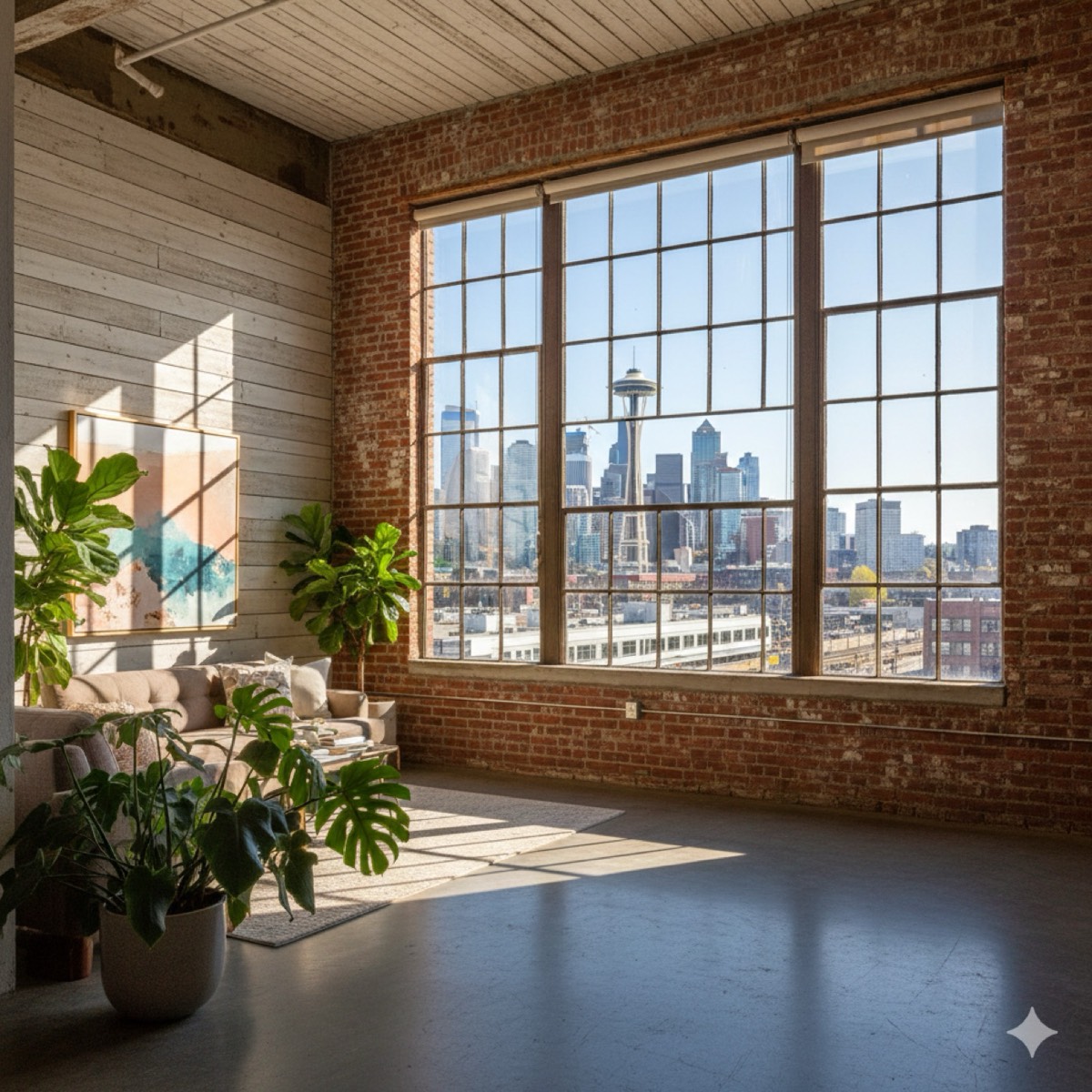
On a Saturday morning in early March, a couple sits at their kitchen island in a converted warehouse loft off 1st Avenue South. Sunlight angles through industrial-scale windows, casting long rectangles across polished concrete floors. One of them scrolls through listing photos on a laptop, studying the homes that sold in the neighborhood last month. The other makes notes on a legal pad: touch up the accent wall, replace the bathroom faucet, figure out what to do about the storage unit in the basement.
They bought this loft three years ago when SODO Seattle real estate was still flying under most buyers' radar. Now the neighborhood is changing. The Makers District proposal, the One Seattle Plan, the steady expansion of the tasting room district along the warehouse blocks. They are not in a rush to sell, but spring feels like the right window. The question is not whether to list. It is how to prepare.
If you own a home in SODO and you are thinking about the spring 2026 market, this guide is for you. Preparing a SODO property for sale requires a different approach than preparing a Craftsman bungalow in Ballard or a colonial in Magnolia. The housing stock here, dominated by lofts, condos, and townhomes in an industrial setting, calls for strategies tailored to what buyers in this market actually value.
Understanding the SODO Buyer in 2026
Before you pick up a paintbrush or schedule a deep clean, it helps to understand who is looking at SODO Seattle real estate and what they prioritize.
The typical SODO buyer in 2026 is pragmatic. They are often a first-time buyer priced out of Capitol Hill, Ballard, or Fremont. They value transit access over tree-lined streets. They appreciate the 70-plus tasting rooms in the warehouse district more than a neighborhood farmers market. They have done the math: a median price between $500,000 and $600,000 for a condo or loft, eight minutes to downtown on light rail, and 120-plus stadium event nights per year add up to a lifestyle that works.
These buyers are also realistic about the neighborhood. They are not expecting manicured sidewalks or a Whole Foods on the corner. They are looking for a well-maintained, thoughtfully finished living space inside a building that functions well. Your preparation should focus on what they care about most: interior quality, building systems, and the story your home tells about how it lives day to day.
Start with the Story Your Home Tells Online
In SODO, where the neighborhood streetscape does not do your marketing for you, your listing photos carry even more weight than usual. Most buyers will encounter your home for the first time on a screen. The photos need to convey warmth, livability, and intentional design.
For lofts and warehouse conversions, this means emphasizing the features that make these spaces distinctive: high ceilings, exposed brick or beam work, natural light, and the sense of volume that traditional homes cannot replicate. Clear sightlines through the space, free of clutter and excess furniture, allow buyers to appreciate the architecture.
For condos and townhomes, the approach is similar but with added attention to the kitchen and bathrooms, which are typically the most photographed and scrutinized rooms. Updated fixtures, clean countertops, and coordinated finishes create the impression of a move-in-ready home.
Professional photography is not optional. It is one of the highest-return investments you can make as a seller. In a neighborhood where the exterior may be an industrial facade or a shared building entrance, the interior is everything.
The Deep Clean That Goes Beyond the Surface
Every selling guide mentions cleaning, but in SODO the details matter more than the generalities. Loft spaces with exposed ductwork, concrete floors, and industrial fixtures collect dust and grime differently than drywall-and-carpet homes. Here is where to focus:
- Exposed ductwork and ceiling systems: Dust accumulates on horizontal surfaces above eye level. Buyers notice it in photos and in person. A professional cleaning of exposed mechanical systems makes the entire space feel cared for.
- Concrete floors: If your loft has polished concrete, consider having the floors professionally buffed and resealed. Scuff marks, stains, and dullness are more visible on concrete than on hardwood or carpet.
- Windows: Industrial-scale windows are one of SODO's selling points. Dirty glass undermines the natural light that makes loft spaces appealing. Interior and exterior window cleaning is a small expense with an outsized visual impact.
- Common areas and building entrance: If you live in a condo or loft building with shared spaces, coordinate with your HOA or building manager to ensure hallways, lobbies, and the building entrance are clean and well-lit before showings begin.
Considering listing your SODO home this spring? I can walk through your property and identify the preparation steps that will have the greatest impact. Reach out or call (206) 854-4468.
Repairs and Upgrades That Move the Needle
Not every repair or upgrade delivers the same return on investment. In SODO's market, where buyers are already accepting certain trade-offs about the neighborhood, interior condition carries disproportionate weight. Focus your budget on the improvements that matter most to this buyer pool.
- Kitchen fixtures and hardware: Replacing dated cabinet pulls, faucets, and light fixtures with clean, modern alternatives can refresh a kitchen for under $500. In a loft where the kitchen is open to the main living area, these details are highly visible.
- Bathroom updates: A new vanity, modern faucet, and fresh caulking around the tub or shower can make a bathroom feel renovated without a full remodel. Budget $1,000 to $2,500 depending on scope.
- Lighting: Loft spaces often rely on track lighting or exposed bulb fixtures. Upgrading to warm LED options or adding pendant lighting over key areas like the kitchen island or dining space enhances both ambiance and functionality.
- Paint: A fresh coat of paint in a neutral, warm tone ties the space together and photographs well. In lofts with accent walls or bold color choices, consider repainting in a more universally appealing palette. Budget $2,000 to $4,000 for a full unit.
- Smart home features: A smart thermostat, keyless entry, or connected lighting system signals modernity and appeals to the tech-adjacent buyer pool that SODO attracts.
Staging a SODO Loft or Condo
Staging an open-plan loft is different from staging a compartmentalized house. The goal is to define zones within the open space so buyers can visualize how the home functions day to day.
A professional stager working in a loft will typically create distinct living, dining, sleeping, and workspace zones using furniture placement, area rugs, and lighting. The result is a space that feels intentional and livable rather than cavernous or undefined.
If professional staging is not in your budget, consider virtual staging for your listing photos. Virtual staging digitally places furniture and decor into photos of empty rooms. It is significantly less expensive than physical staging, typically $100 to $300 per photo, and can dramatically improve online engagement with your listing.
For townhomes and condos with traditional room layouts, staging follows more standard principles: declutter aggressively, remove personal items, add fresh linens and simple decor, and ensure every room has a clear purpose.
Timing Your Spring Listing in the SODO Market
Seattle's spring selling season typically runs from mid-March through June, with peak buyer activity in April and May. For SODO sellers, two additional timing factors are worth considering in 2026.
First, the Seattle Mariners' home schedule begins in late March, and the Sounders' season is already underway by that point. Game-day activity around T-Mobile Park and Lumen Field creates a built-in audience of people passing through the neighborhood who might not otherwise visit. Open houses scheduled on game-day weekends can draw unexpected foot traffic.
Second, the broader conversation about SODO's development trajectory, including the Makers District proposal and the One Seattle Plan, keeps the neighborhood in the public eye. News coverage and planning discussions generate awareness that benefits sellers by keeping SODO top of mind for buyers who might be on the fence about the area.
The ideal window for a SODO listing in 2026 is likely the first two weeks of April. That timing captures the early spring surge in buyer activity, aligns with the opening of baseball season, and positions your listing ahead of the wave of other sellers who wait until May.
Pricing in a Transitional Market
SODO's median price for condos and lofts sits between $500,000 and $600,000, with homes averaging about 39 days on market. Those numbers tell you two things: the market is slower than Seattle's hottest neighborhoods, and pricing accuracy matters even more as a result.
In a 13-day market like Columbia City, a slightly overpriced listing may still attract offers because buyer urgency is so high. In SODO, where homes sit for five to six weeks on average, an overpriced listing can stagnate. Buyers who are sophisticated enough to choose SODO are also sophisticated enough to recognize inflated pricing.
The most effective approach is to price at or just below the most recent comparable sales. This strategy maximizes early interest, which is your best chance of generating multiple offers. A comparative market analysis focused specifically on your building, floor plan, and finish level is essential. Generic neighborhood averages are not precise enough for a market this specific.
Making the Most of the Moment
Selling a home in SODO in spring 2026 means selling into a neighborhood that is actively evolving. The tasting room district is expanding, transit connections are strengthening, and the city's long-term vision for the area includes significant residential growth. That context works in your favor as a seller because it gives buyers a reason to see their purchase as more than just a current-day transaction.
Your job as a seller is to make sure your property lives up to the story the neighborhood is telling. A well-prepared, thoughtfully priced, professionally photographed home in SODO will stand out precisely because the competition is limited and the buyer interest is growing.
The spring market waits for no one. If you are considering a sale, the time to start preparing is now.
Ready to prepare your SODO home for the spring market? Contact Eric Uyeji at (206) 854-4468 or for a personalized preparation plan and market analysis.