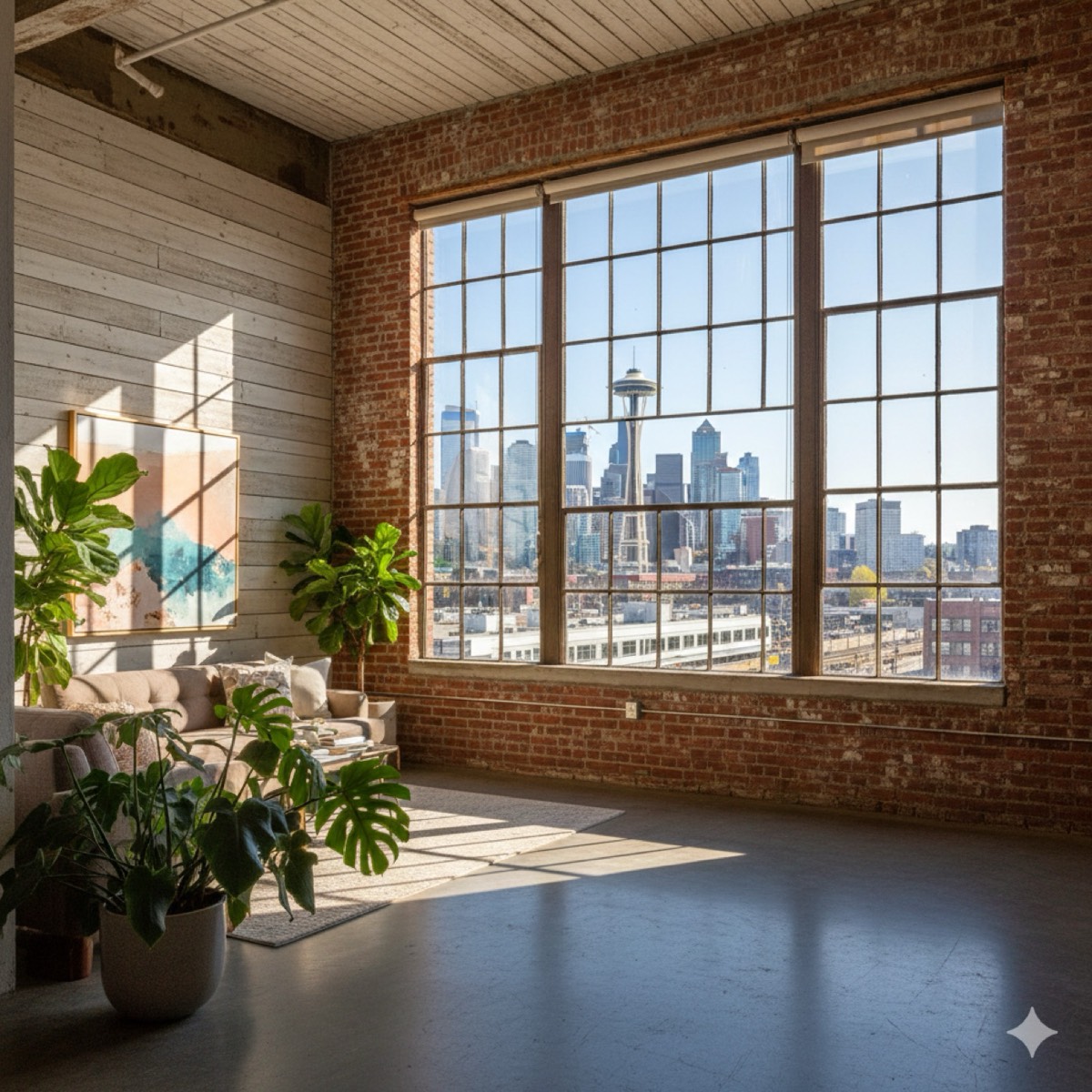
The SODO Seattle rental market runs on a rhythm the rest of the city rarely sees. Freight trucks roll down 1st Avenue South at dawn. A lunchtime crowd forms at the Gastropod food-truck lot, and the stands fill on Mariners and Sounders nights. For a landlord, that rhythm is the whole story. People want to live where the trains, the stadiums, and downtown all sit a short walk away, and SODO puts them right in the middle of it.
Here is the short answer. The SODO Seattle rental market is small, transit-driven, and loft-heavy, with strong tenant demand near the SODO Station and the stadium district. Landlords who buy the right unit and price it to the neighborhood can earn steady rent, though residential inventory stays thin.
I have spent more than 30 years helping people buy and sell across South Seattle. Lately I get asked about SODO rentals more often than at almost any point I can remember. The questions are nearly always about the numbers. This guide walks through what those numbers look like, block by block.
What This SODO Seattle Rental Market Guide Covers
SODO stands for South of Downtown, and the name explains most of its appeal to renters. The district sits just below Pioneer Square and wraps around T-Mobile Park and Lumen Field. It connects to the rest of the city through the SODO Station and the SoDo Busway. For a tenant who works downtown or values a short airport run, few addresses compete.
This guide covers three things a landlord needs before buying here. First, what renters actually pay. Second, how the return math works on a typical SODO loft. Third, where the SODO Seattle rental market appears to be heading as the district's zoning shifts.
None of this replaces a unit-by-unit analysis, which I am glad to run for any building you are weighing. Think of it as the frame you build the specifics into. For the wider neighborhood picture, my SODO neighborhood guide covers daily life and what it feels like to live here.
How Strong Is the SODO Seattle Rental Market Right Now?
Demand in the SODO Seattle rental market is steadier than the district's rough edges suggest. The reason is simple. SODO was built to move things, and that same infrastructure now moves people, which is exactly what a certain kind of renter is looking for.
The SODO Station sits on Sound Transit's 1 Line, the spine that runs from Northgate through the University of Washington, downtown, and on to Sea-Tac Airport. From SODO, downtown is roughly five minutes and the airport is about 25. According to Walk Score, SODO carries a Transit Score of 64 and a Bike Score of 62. Those numbers describe a place where tenants can live comfortably without leaning on a car.
Supply is the other half of the picture. SODO remains primarily industrial and commercial, so residential units are scarce, and scarcity keeps occupancy tight. A well-located loft rarely sits empty for long. The pool of renters who want this mix of access and character outnumbers the handful of units that serve them.
What Renters Pay in the SODO Seattle Rental Market
Rents in SODO reflect what the units are: lofts and condos carved out of former warehouse and industrial space, not conventional apartments. You are renting volume, light, and location rather than a standard floor plan. The ranges below are estimates in a thin market, so treat them as a starting frame.
| Unit Type | Typical Monthly Rent (est.) | What Landlords Should Know |
|---|---|---|
| Studio or small loft | $1,700 - $2,000 | Strongest demand from downtown workers who want a short commute |
| One-bedroom loft | $2,000 - $2,400 | The core of the rental pool, easiest to lease and re-lease |
| Live-work or two-bedroom | $2,600 - $3,200 | Appeals to makers and small businesses, longer tenancies |
Notice how the one-bedroom loft anchors the middle. That unit type is the workhorse of the SODO Seattle rental market, because it leases quickly and turns over cleanly when a tenant moves on. Live-work spaces command more rent and often hold tenants longer, since a small business does not relocate on a whim.
Running the Numbers on a SODO Rental Property
Rent alone does not tell you whether a purchase makes sense. What matters is the return after costs, and there are three plain-language terms worth knowing before you buy.
Gross yield is the annual rent divided by the purchase price, before any expenses. A capitalization rate, or cap rate, is the income a property produces after operating costs, divided by its price. It lets you compare very different buildings on the same footing. Vacancy is the share of the year a unit sits empty between tenants. Even a strong rental loses a few weeks, so a careful landlord budgets for it rather than assuming full occupancy.
Here is how those terms play out on a representative SODO loft.
| Line Item | Sample Figure | Notes |
|---|---|---|
| Purchase price | $550,000 | Near the SODO residential median |
| Monthly rent | $2,400 | A well-placed one-bedroom loft |
| Annual gross rent | $28,800 | Gross yield near 5.2 percent |
| Operating costs and vacancy | about 35 percent | Taxes, insurance, HOA dues, upkeep, empty weeks |
| Cap rate | roughly 3.4 percent | Modest current income, room for appreciation |
Those figures describe a location play, not a high-yield one. SODO tends to pair modest current income with the potential for the underlying value to rise as the district changes. If cash flow today is your only goal, a duplex in a more residential area may serve you better, and my look at investing in Rainier Beach walks through that trade.
Curious what a specific SODO loft would actually rent for and net after costs? Send me the address and I am happy to pull the comparable rents and run the return with you, no pressure attached.
What Kind of Rental Property Fits SODO Seattle?
The residential stock here is unusual, and knowing the types helps you shop with clear eyes. Most SODO homes started life as something else, so you are choosing among conversions rather than purpose-built rentals.
Loft conversions are the most common. Expect high ceilings, large industrial windows, and open layouts that photograph well and lease quickly to tenants who want character. Condos in converted buildings offer a similar feel with the structure of an owners association, which can simplify maintenance while adding monthly dues to your math.
Live-work units are the district's signature. A ground-floor space set up for a studio, a workshop, or a small storefront draws makers and independent businesses. That is the same creative energy that produced the SODO Track murals and the warehouse-block breweries. Those tenants tend to stay, which smooths out vacancy over time.
Quick Facts: SODO Rental Market at a Glance
- Dominant unit types: Loft conversions, condos, live-work spaces
- Typical rents (est.): $1,700 to $3,200 depending on size
- Sample gross yield: near 5 percent before expenses
- Sample cap rate: roughly 3 to 4 percent after costs
- Transit Score / Bike Score: 64 / 62
- Tenant draw: SODO Station, SoDo Busway, Lumen Field, T-Mobile Park
Where the SODO Seattle Rental Market Is Headed
The most interesting part of the SODO Seattle rental market is the direction of travel. The district is gradually shifting from pure industrial toward mixed-use, and that shift is the heart of the investment case. As Seattle reworks its zoning and the One Seattle Plan keeps SODO in the conversation, the residential layer that has slowly appeared among the warehouses is likely to thicken.
For a landlord, that matters in two ways. More residential neighbors over time can support rents and make units easier to lease. And early ownership in a district that is redefining itself is where appreciation tends to come from, since the buyers who arrive after the transition pay for what is already visible.
None of that is a certainty, and I never present it as one. What I can say is that the location fundamentals support steady demand even while supply stays limited: the transit, the stadiums, the proximity to downtown and the port. For a deeper read on pricing momentum, see what SODO home prices reveal about South Seattle. And my guide to building long-term wealth through SODO investment property goes further on strategy.
Who the SODO Seattle Rental Market Suits
SODO is not the right rental for every investor, and that is worth saying plainly. The landlords who do well here tend to share a mindset. They value location and long-term potential over immediate cash flow. They are comfortable owning a loft or condo rather than a house with a yard. And they see the district's industrial character as an asset rather than a drawback.
Practically, that profile often means investors adding a transit-anchored unit to a broader portfolio, owners who want a low-maintenance property near the action, and buyers who believe in the arc of SODO's transition. If you want a more conventional residential setting with houses and schools nearby, the SODO hub links to neighboring areas that may fit better, from Georgetown to Beacon Hill.
The through line is patience. SODO rewards owners who understand what they are buying and hold through the district's evolution. In a thin market, that steady approach is what turns a good building into a lasting investment.
Frequently Asked Questions
Is SODO Seattle a good place to own a rental property?
SODO suits landlords who want steady, transit-driven demand and are comfortable with lofts and condos rather than single-family houses. Tenant interest stays strong near the SODO Station and the stadium district, and limited supply keeps well-located units occupied. It is a location play more than a cash-flow bonanza, so the numbers reward careful buying.
What do rentals cost in the SODO Seattle rental market?
Most SODO rentals are lofts and condos rather than houses. Studios and small lofts commonly rent in the range of $1,700 to $2,000 a month, one-bedroom lofts around $2,000 to $2,400, and larger live-work or two-bedroom units near $2,600 to $3,200. These are estimates in a thin market, so a current read on a specific building matters.
What return can a landlord expect in SODO Seattle?
On a loft near a $550,000 purchase price renting for about $2,400 a month, gross yield lands near 5 percent before expenses. After taxes, insurance, any HOA dues, maintenance, and vacancy, the cap rate often settles in the 3 to 4 percent range. SODO tends to pair modest current yield with long-term appreciation potential.
Why do renters want to live in SODO Seattle?
Renters come for access. The SODO Station on the 1 Line reaches downtown in about five minutes and Sea-Tac Airport in roughly 25, the SoDo Busway adds several Metro routes, and Lumen Field and T-Mobile Park sit within walking distance. Tenants who work downtown or travel often value that connection over a yard.
Is there enough rental inventory in SODO Seattle to invest?
Inventory is limited because SODO remains primarily industrial and commercial. Residential stock is mostly loft and condo conversions, and new units appear slowly as the district shifts toward mixed-use. Thin supply is part of the appeal for landlords, since it keeps occupancy tight, but it also means the right unit is worth acting on when it comes up.
Where is the SODO Seattle rental market headed?
The district is gradually moving from pure industrial toward mixed-use as Seattle zoning evolves and the One Seattle Plan keeps SODO in the conversation. Early owners of loft and condo conversions near transit are positioned for that transition. It is a thesis rather than a guarantee, but the location fundamentals support steady rental demand.