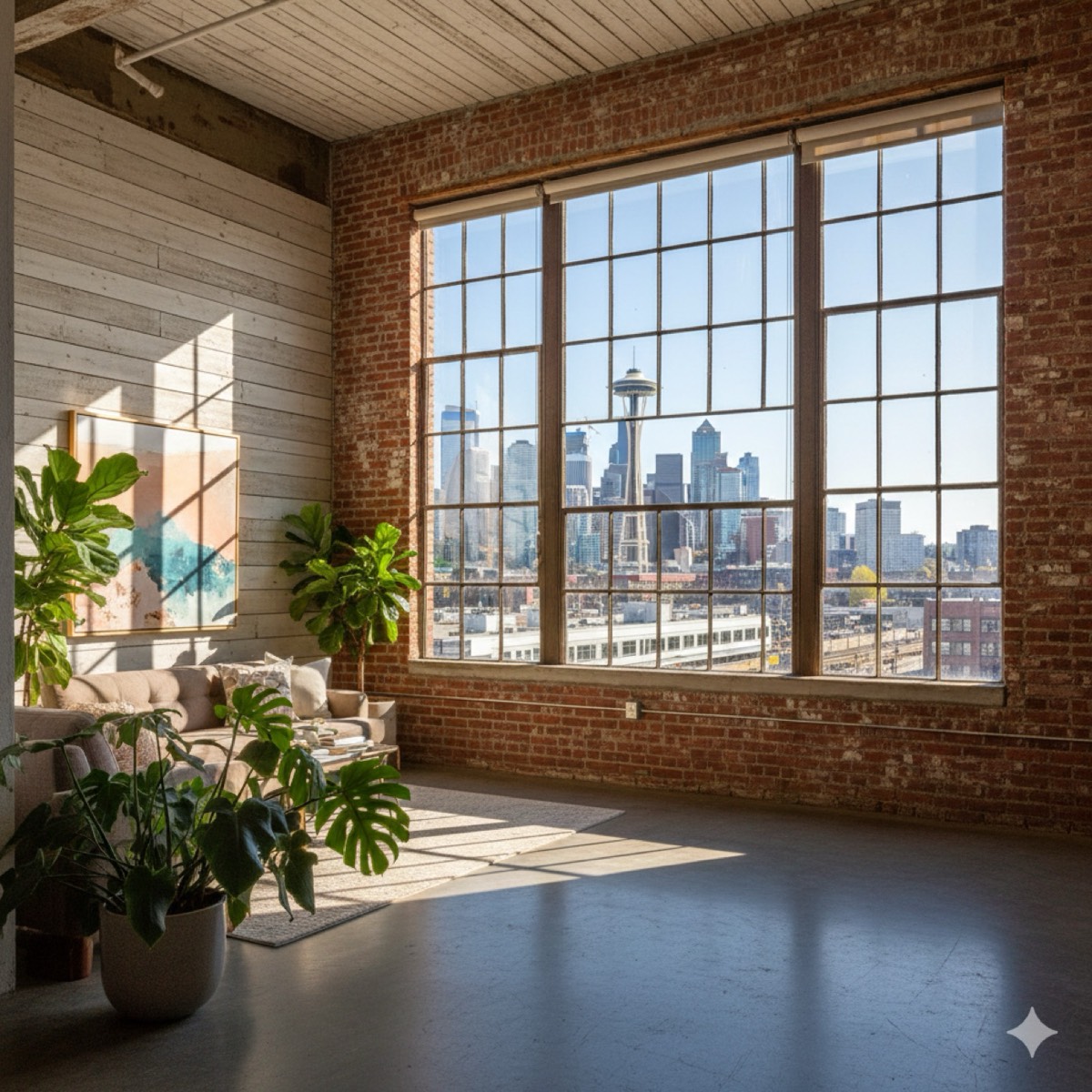
SODO Seattle condos sit near a median of $550,000 and roughly $450 per square foot, which makes them one of the lower entry points you will find this close to downtown. Most are loft conversions in former warehouse buildings rather than traditional units, and true townhomes are rare inside the district. Buyers watching a budget generally compare SODO against Georgetown and Beacon Hill.
That is the short answer. The longer one is more interesting, because price alone does not explain what you are actually buying here. A loft on 1st Avenue South and a townhome six minutes south in Georgetown can carry similar numbers and offer completely different lives.
What SODO Seattle Condos Cost Right Now
Start with the caveat that matters most. SODO remains primarily an industrial and commercial district, so residential sales are sparse. The figures below describe a thin market, and they work best as a starting frame rather than an appraisal of any single unit.
With that said, the numbers are steady. Median price sits near $550,000. Price per square foot lands around $450. Average days on market runs about 35, and well-priced units still close near 98 percent of asking. Set against the wider Seattle housing market, that combination puts SODO below most close-in neighborhoods on total price.
| Neighborhood | Median Price (est.) | Price per Sq Ft | Days on Market |
|---|---|---|---|
| SODO | $550,000 | ~$450 | ~35 |
| Georgetown | $500,000 | ~$492 | ~41 |
| Rainier Beach | $689,000 | ~$333 | ~6 |
| Beacon Hill | $715,000 | ~$450 | ~27 |
| Columbia City | $840,000 | ~$468 | ~13 |
Read the two price columns together and the story sharpens. Rainier Beach carries a higher median but a much lower cost per square foot, because you are usually buying a house with a yard. SODO Seattle condos invert that: a smaller footprint at a higher rate per foot, in exchange for a location that is hard to match.
Why SODO Seattle Condos Look Different From the Rest of the City
Almost every residential unit in SODO began as something else. Warehouse floors became lofts. Industrial buildings became condos. Ground-floor bays became live-work spaces. That history shows up in the square footage in ways a listing photo does not always convey.
Ceilings run tall. Windows are large and often original. Floor plans open up rather than divide, which means a 900 square foot loft in SODO can feel more spacious than a 1,100 square foot unit with conventional walls. It also means the second bedroom you were counting on may not exist.
The trade is real and worth naming plainly. You are buying volume, light, and character instead of separate rooms and storage. For a buyer who works from a single desk and cooks in an open kitchen, that trade is a bargain. For a buyer who needs a door to close, it is not.
SODO Seattle Condos Compared With Townhomes Nearby
True townhomes are uncommon inside SODO. The zoning simply has not produced many, and the residential layer that exists came from conversion rather than new construction. Buyers who want a townhome usually end up looking a few minutes south or east.
Georgetown is the closest comparison, with a median near $500,000 and a similar creative, industrial-adjacent character. Beacon Hill sits uphill with more traditional stock and a real neighborhood school system. Columbia City costs more and moves faster, with a 13-day average that leaves little room to deliberate.
Here is the practical distinction. A townhome in one of those neighborhoods typically gives you two or three floors, an attached garage, a small yard or roof deck, and lower monthly dues. A SODO loft gives you one level, no yard, a shared entry, and a five-minute train ride to downtown. Neither is better in the abstract. They are different lives at a similar price.
If you are weighing a specific SODO building against a Georgetown townhome, that is a conversation I am glad to have. Pulling the actual comparables for both and walking the two blocks at the same hour on the same day usually settles the question faster than another week of scrolling listings.
What Your Monthly Costs Cover in a SODO Condo
Monthly dues deserve more attention in SODO than in most neighborhoods, because converted buildings carry unusual systems. Dues generally cover the exterior, roof, common areas, water and sewer, garbage, and master insurance. In an older conversion, they may also be quietly funding decades-old plumbing and electrical behind restored brick.
Two documents tell you what you need to know. The resale certificate lays out the building's rules, budget, and any pending assessments. The reserve study shows whether the association has been setting money aside for the roof and the elevator or hoping the next owner deals with it.
I read those before I read the listing description. A building with well-funded reserves and higher dues is frequently the better buy compared with a building advertising low dues and a thin reserve balance. The second one is not cheaper, it is deferred.
SODO Seattle Condos at a Glance
- Median price (est.): $550,000
- Price per square foot: around $450
- Typical home type: loft and warehouse-conversion condos, live-work units
- Townhome availability: rare inside SODO, common in Georgetown and Beacon Hill
- Average days on market: about 35
- Transit Score / Bike Score: 64 / 62
Everyday Life Around the SODO Stadium District
Budget is only half of a housing decision. The other half is what a Tuesday feels like, and SODO has a rhythm unlike anywhere else in Seattle.
Mornings belong to the working district: freight moving along 1st Avenue South, the coffee line at the Filson flagship on 4th, murals of the SODO Track catching the light along the rail corridor. Lunch happens at Gastropod and the rotating food truck lots. Evenings are quiet, until a Mariners or Sounders match turns the streets into something closer to a festival.
The practical amenities hold up too. The SODO Trail connects toward Georgetown and the Duwamish River Trail for walking and cycling. The SODO Costco is one of the highest-volume stores in the country. Breweries and tasting rooms keep appearing between loading docks. According to Walk Score, the district carries a Transit Score of 64 and a Bike Score of 62.
What SODO does not have is a neighborhood school. Seattle Public Schools serves the area, but the campuses sit in Beacon Hill and the International District, which shapes who tends to buy here.
Who SODO Seattle Condos Actually Suit
The buyers who do well here share a profile. They value being five minutes from downtown and 25 from the airport more than they value a lawn. They like an open floor plan with industrial bones. They are comfortable living in a district that is still honestly industrial.
In practice that means first-time buyers looking for a walkable entry point, downsizers who want low-maintenance living near the action, and investors who see a long transition from industrial toward mixed-use. My SODO first-time buyer guide goes deeper on that path, and buying near the stadium district covers the location question block by block.
Families who want a yard and a walkable elementary school are usually happier a mile east. That is not a knock on SODO. It is the reason the price sits where it does.
How to Compare SODO Seattle Condos Before You Offer
In a market this thin, averages will not carry you. Comparable sales are limited enough that a single unusual sale can drag the median in either direction, so the work happens unit by unit.
Four things move value more than anything else in these buildings: ceiling height, natural light and window exposure, walk time to the SODO Station, and the health of the association's reserves. Two lofts on the same floor can justify a $60,000 difference on those factors alone.
My read on the wider market is in what SODO home prices tell us about South Seattle momentum, and the full neighborhood picture is in my SODO neighborhood guide. Together they give you the context that a listing sheet leaves out.
I have spent more than 30 years reading South Seattle block by block, and SODO is the district where that reading matters most. The slower 35-day pace here is a genuine gift to a buyer on a budget. Use it.
Frequently Asked Questions
How much do SODO Seattle condos cost?
Residential prices in SODO center on a median near $550,000, with price per square foot around $450. Because the district is mostly industrial and residential sales are sparse, that median describes a thin market rather than a busy one. Two units in the same building can sit far apart in price depending on ceiling height, light, and walk time to the SODO Station.
Are SODO Seattle condos a good choice for a first home?
They suit a specific first-time buyer well. If you want a central, transit-first location and you are comfortable with an open loft layout instead of separate rooms and a yard, SODO offers one of the lower entry points close to downtown. Buyers who want a garage, a fenced yard, or a neighborhood elementary school usually find a better fit in Beacon Hill or Columbia City.
What is the difference between SODO Seattle condos and townhomes nearby?
SODO inventory is overwhelmingly condo and loft conversions carved out of former warehouse buildings, with shared entries and no private outdoor space. Townhomes are rare inside SODO itself and far more common a few minutes south and east in Georgetown, Beacon Hill, and Columbia City, where you typically get two or three floors, a small yard or roof deck, and an attached garage.
What do HOA dues cover in SODO Seattle condos?
In converted warehouse buildings, dues usually cover the building exterior, roof, common areas, water and sewer, garbage, and master insurance. Older conversions can carry higher dues because the systems behind the walls are original to the building. Reading the resale certificate and reserve study tells you whether the dues reflect a well-funded building or a deferred bill.
Can you live in SODO without a car?
Many residents do. The SODO Station on Sound Transit's 1 Line puts downtown about five minutes away and Sea-Tac Airport about 25, and the SoDo Busway adds several Metro routes. SODO carries a Transit Score of 64 and a Bike Score of 62, which describes a place where a car is optional rather than assumed.
How long do SODO Seattle condos take to sell?
Average days on market in SODO runs near 35, notably slower than the 13-day pace in Columbia City. For a buyer, that slower rhythm is an advantage. You generally have time to tour a unit twice, compare it against the handful of other listings, and make a measured decision instead of a same-day one.