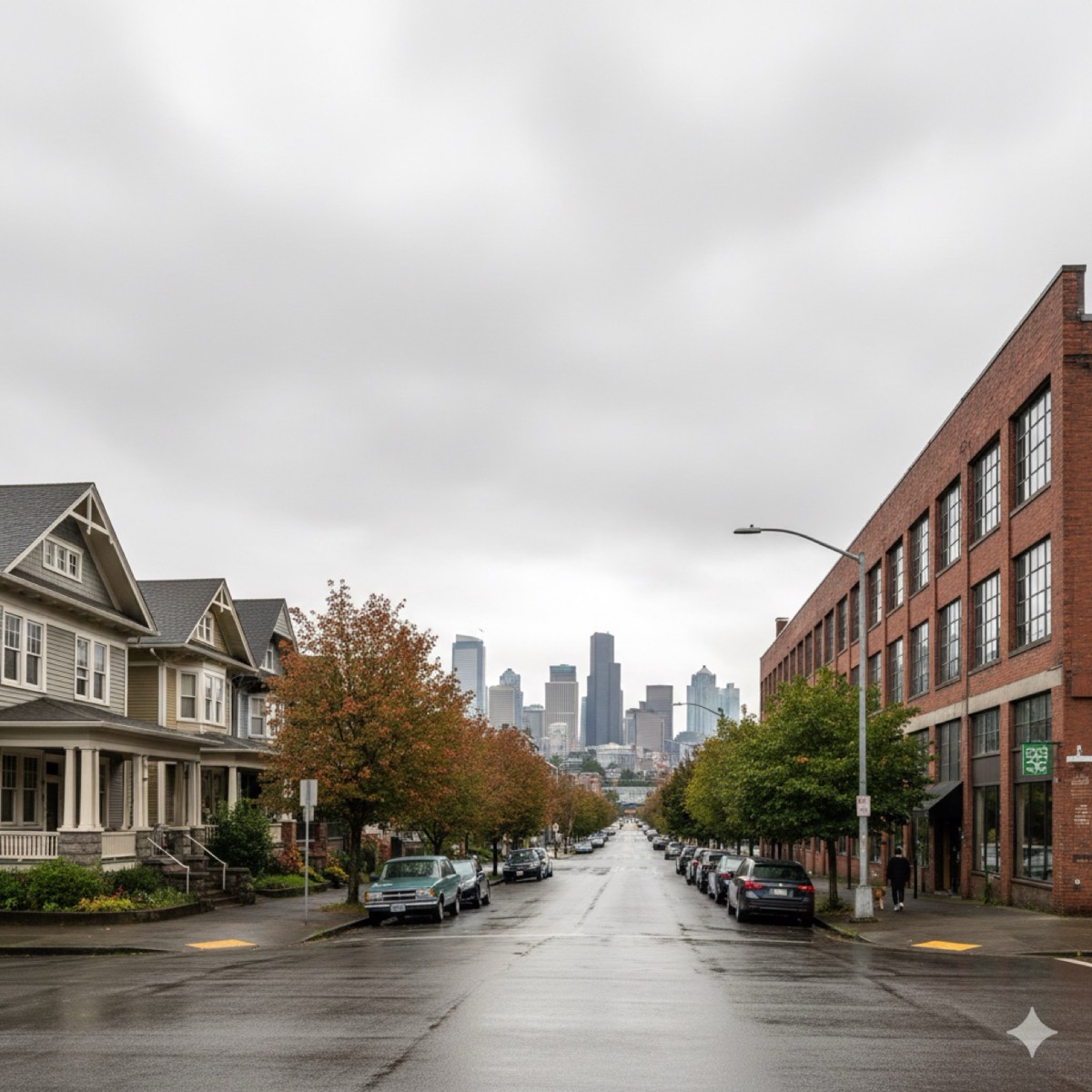
Georgetown's median home price ranges from $500,000 to $670,000, making it one of the lowest entry points for buyers looking in central Seattle. But the headline median only tells part of the story. To understand what you are actually paying for, and whether Georgetown Seattle real estate represents genuine value or simply a lower-cost compromise, you need to look at the price-per-square-foot data.
Price per square foot strips away the variables of lot size, bedroom count, and total footprint. It gives you a cleaner comparison across property types and neighborhoods. And in Georgetown, the numbers reveal something that most buyers do not expect: this neighborhood is not just affordable by Seattle standards. It is undervalued relative to what it offers.
This article breaks down the price-per-square-foot data for Georgetown Seattle real estate, compares it to surrounding neighborhoods, and explains what the numbers mean for buyers considering a purchase in 2026.
Georgetown Seattle Real Estate by the Numbers
The table below captures the key pricing metrics for Georgetown and places them alongside Seattle's broader market for context.
A few things stand out immediately. Georgetown's price per square foot runs roughly 15-30% below the citywide average, depending on property type. That gap is significant. On a 1,200-square-foot home, the difference between $400 per square foot and $500 per square foot is $120,000. That is real money, and it translates directly into lower monthly mortgage payments, smaller down payment requirements, and more flexibility in your budget.
The days-on-market figure also deserves attention. Georgetown homes sit slightly longer than the citywide median, which means buyers have more time to evaluate, negotiate, and make deliberate decisions. In neighborhoods where homes sell in under two weeks, that breathing room is a genuine advantage.
Price Per Square Foot by Property Type in Georgetown
Georgetown's housing stock is more varied than most people assume. Here is how pricing breaks down by property type.
The range is wide enough to serve buyers at different budget levels. Craftsman bungalows are Georgetown's signature housing type, many dating to the 1920s and 1930s with original millwork, built-in cabinetry, and covered front porches. These homes trade at a slight discount on a per-square-foot basis compared to newer construction, but they offer character and lot sizes that new builds cannot match.
Warehouse loft conversions appeal to buyers who want open floor plans, high ceilings, and an industrial aesthetic. The price per square foot for lofts falls in the middle range, though finishes vary widely. A raw loft with exposed systems will price differently than one with a full kitchen renovation and polished concrete floors.
New-construction townhomes command the highest price per square foot in Georgetown, which is typical across Seattle. Buyers pay a premium for modern insulation, wiring, plumbing, and energy efficiency. In Georgetown, that premium is smaller than in neighborhoods like Ballard or Fremont, where new townhomes routinely exceed $500 per square foot.
Mid-century ranches represent the most accessible price point in Georgetown. These homes often sit on generous lots with mature landscaping. Many need updating, which means buyers can purchase at a lower cost basis and add value through targeted renovations over time.
How Georgetown Compares to Neighboring Areas
Buyers exploring Georgetown typically also consider the adjacent neighborhoods. Here is how the price-per-square-foot data compares across the South Seattle corridor.
Georgetown sits at or near the bottom of this range on a per-square-foot basis, while offering comparable proximity to downtown. The primary trade-off is transit: Georgetown does not have its own light rail station, unlike Beacon Hill, Columbia City, and SODO. Bus Route 124 provides the main public transit connection, and car commutes to downtown run 8 to 12 minutes outside peak hours.
For buyers who drive or work from home, that transit gap may not matter. For those who depend on light rail, the price difference between Georgetown and Beacon Hill or Columbia City effectively reflects the value the market places on station access.
The comparison with SODO is particularly interesting. Both neighborhoods share similar price ranges, but SODO's residential inventory skews heavily toward condos and lofts, while Georgetown offers more single-family homes and townhomes. Buyers who want a yard, a garage, or a standalone structure will find more options in Georgetown.
Want to compare Georgetown listings side by side? Browse current homes for sale
What the Rezoning Data Means for Future Values
Georgetown is in the early stages of a significant zoning shift. The Georgetown Live/Work District rezoning approved by the City of Seattle opens the door for approximately 900 new residential units in the neighborhood. This is a substantial increase for an area that has historically been zoned for industrial and light-commercial use.
For current buyers, the rezoning carries two important implications.
First, new supply will eventually enter the market. Most of the planned development is expected to be mixed-use, with ground-floor commercial or studio space and residential units above. This housing will likely price at the newer-construction end of the spectrum, in the $450-$500 per square foot range.
Second, increased residential density tends to attract additional retail, dining, and services. Georgetown already has a strong food and beverage scene anchored by Georgetown Brewing, All City Coffee, Fran's Chocolates, and Jules Maes Saloon. More residents mean more foot traffic, which typically supports additional business investment. That dynamic has historically been positive for property values.
The timeline is long. Permitting, construction, and absorption for 900 units will likely play out over five to ten years. In the near term, existing inventory remains limited, and the price-per-square-foot data suggests that Georgetown's current pricing has not yet fully reflected the rezoning's potential impact.
The Investment Math: What $500,000 Buys You in Georgetown
To make the numbers tangible, here is what a $500,000 purchase looks like in Georgetown compared to other Seattle neighborhoods.
The contrast is stark. A buyer who spends $500,000 in Georgetown can reasonably expect a three-bedroom home with a yard and dedicated parking. The same budget in Capitol Hill or Ballard buys a fraction of the space with no outdoor area.
For first-time buyers who want to build equity in a standalone home rather than a condo, Georgetown's price-per-square-foot advantage is difficult to replicate anywhere in central Seattle. The neighborhood's proximity to downtown, its established food and beverage culture, and its planned development trajectory add layers of value that the headline price alone does not capture.
What This Means for You
The price-per-square-foot data paints a clear picture of Georgetown's position in the Seattle market. This is a neighborhood where buyers get significantly more space, more character, and more potential per dollar than in most comparable central Seattle locations.
The trade-offs are real. Georgetown lacks a light rail station, some blocks retain their industrial character, and the neighborhood's retail infrastructure is still growing. But for buyers who evaluate homes on a cost-per-square-foot basis, the math consistently favors Georgetown.
If you are a first-time buyer looking for a foothold in Seattle's housing market, Georgetown deserves a spot on your shortlist. If you are a move-up buyer seeking more space than a condo or townhome in a pricier neighborhood, Georgetown's Craftsman bungalows and ranch homes offer square footage and lot sizes that are increasingly rare inside the city limits.
The data does not lie. Georgetown is one of the best values in central Seattle, and the numbers suggest that this window of relative affordability will not remain open indefinitely.
Ready to explore Georgetown Seattle real estate? Contact Eric Uyeji at (206) 854-4468 or for a personalized market analysis.