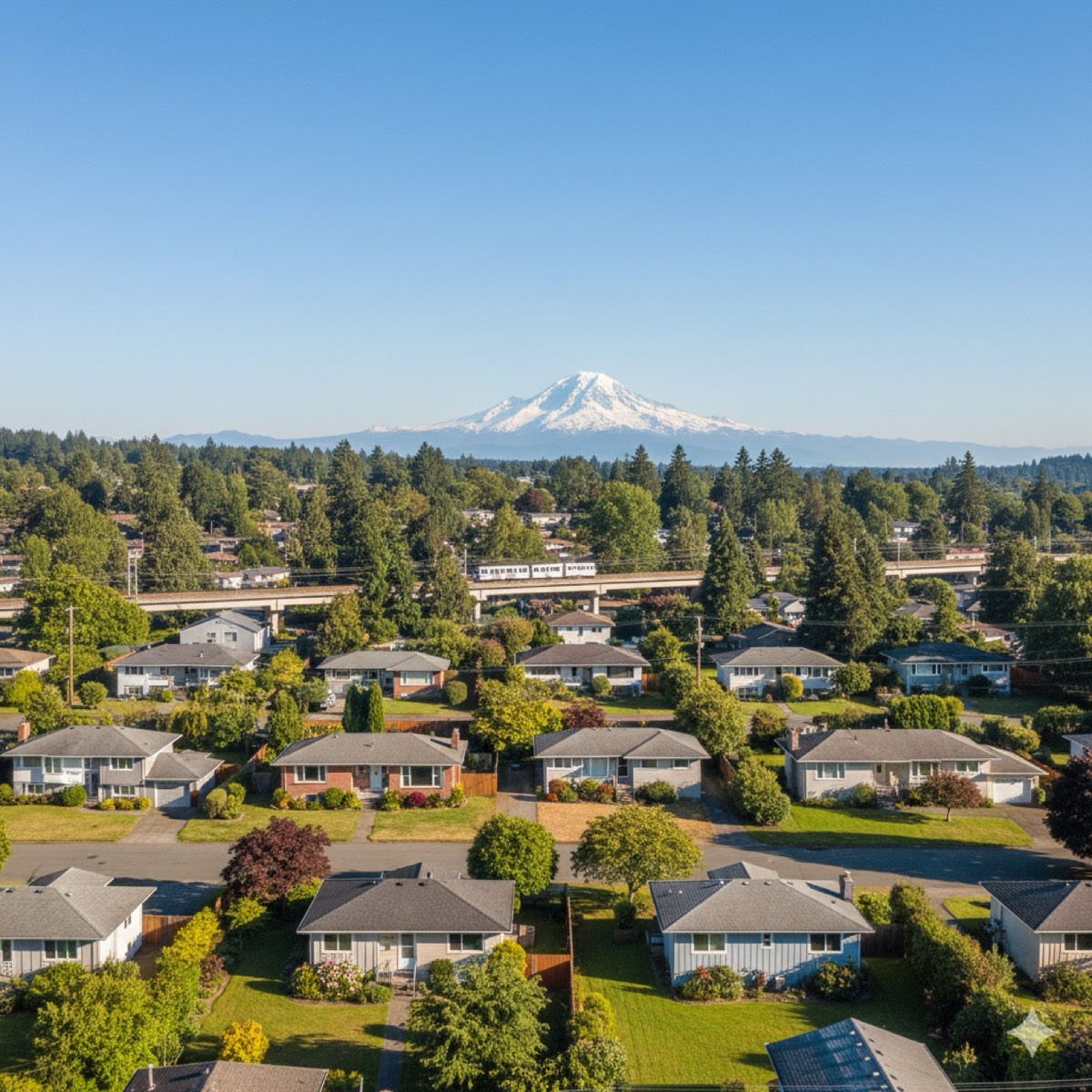
North Beacon Hill's median home price has climbed to $745,000, driven by a 15.6% year-over-year appreciation rate that ranks among the strongest in Seattle. But one mile south, in the quieter blocks of South Beacon Hill, the numbers tell a different story. Homes here are selling in the $550,000 to $750,000 range, offering 15 to 25 percent savings compared to the northern end of the same neighborhood.
For buyers searching Beacon Hill Seattle homes for sale, that price gradient within a single neighborhood creates a genuine opportunity. South Beacon Hill shares the same zip code, the same city services, and access to the same light rail system, yet it delivers meaningfully lower entry points. The question is what accounts for the difference and whether the trade-offs are worth the savings.
The data provides clear answers, and for budget-conscious buyers who are willing to look beyond the most obvious blocks near the station, South Beacon Hill deserves serious consideration.
Beacon Hill Seattle Homes for Sale: North vs. South by the Numbers
The following table compares key metrics between North Beacon Hill and South Beacon Hill to illustrate the price gradient within the neighborhood.
The most striking figure in this comparison is the price-per-square-foot difference. At $320 to $420 per square foot in South Beacon Hill versus $450 to $520 in the north, a buyer purchasing 1,500 square feet of living space could save $45,000 to $150,000 simply by looking a mile further south. That savings is not abstract. It translates to a lower monthly mortgage payment, a larger down payment cushion, or the budget for post-purchase renovations.
Lot sizes in South Beacon Hill are also notably larger, often running 4,500 to 6,000 square feet compared to 3,500 to 5,000 in the north. For families who need outdoor space, garden room, or the option to add an accessory dwelling unit, that extra land carries real value.
What Drives the Price Difference
Three primary factors explain the price gradient between North and South Beacon Hill.
The first and most significant is light rail proximity. North Beacon Hill's station is one of the highest-value transit assets in South Seattle, and homes within walking distance command a premium. South Beacon Hill is beyond comfortable walking distance to the station, typically requiring a bus connection via Metro Route 36 or 107 to reach the light rail. That additional step in the commute reduces the transit convenience premium that drives North Beacon Hill prices.
The second factor is commercial density. North Beacon Hill's stretch of Beacon Avenue S is a walkable commercial corridor with restaurants, cafes, and small businesses. South Beacon Hill has fewer retail options within walking distance, and the area has a more residential, less urban feel.
The third factor is school ratings. Van Asselt Elementary, which serves portions of South Beacon Hill, carries a GreatSchools rating of 4 out of 10. Aki Kurose Middle School holds a 3 out of 10. These ratings, while not the full picture of educational quality, do influence buyer demand and contribute to the pricing differential. In contrast, North Beacon Hill's Beacon Hill International School carries a 9 out of 10 rating, which is a significant draw for families.
The Value Case for South Beacon Hill
Despite the factors that keep South Beacon Hill prices below the northern end, several characteristics make this area compelling for the right buyer.
Lot size and housing quality are the primary draws. The older Craftsman homes in South Beacon Hill often sit on lots of 5,000 to 6,000 square feet, providing garden space, off-street parking, and room for outdoor living that more expensive neighborhoods cannot offer. Many of these homes retain original architectural details, including built-in cabinetry, hardwood floors, and covered porches, at price points that would not buy a one-bedroom condo in several other Seattle neighborhoods.
The neighborhood is quieter and more family-oriented than the northern end. Streets are tree-lined, traffic is lighter, and the overall density is lower. For buyers who prefer a more suburban feel within city limits, South Beacon Hill delivers that atmosphere without actually being in the suburbs.
Transit access, while less convenient than in the north, is functional. Bus routes connect South Beacon Hill to the light rail station, downtown Seattle, and the Rainier Valley corridor. The commute adds 10 to 15 minutes compared to walking to the station from North Beacon Hill, but for buyers who drive or have flexible work arrangements, that difference is manageable.
Looking for value in Beacon Hill? Browse current listings to compare properties across the neighborhood.
What to Watch: Development and Infrastructure Changes
Several developments could affect South Beacon Hill's value trajectory in the coming years.
Seattle's One Seattle Comprehensive Plan, effective January 2026, increases housing capacity around transit corridors throughout the Rainier Valley. While South Beacon Hill does not have its own light rail station, the city's approach to zoning density along bus corridors could unlock additional development potential in the area.
The New Holly redevelopment, funded by $47 million in federal investment, continues to add over 1,000 homes to the broader South Beacon Hill area. This mixed-income development deepens the neighborhood's residential base and brings improvements to streets, sidewalks, and community facilities.
Protected bike lanes along Beacon Avenue S, completed in 2025, improve north-south connectivity and make cycling to the light rail station a more practical option for South Beacon Hill residents. For commuters willing to bike 10 to 15 minutes to the station, the transit gap between south and north narrows considerably.
Jefferson Park, the 51.5-acre hilltop park that serves as Beacon Hill's premier green space, sits on the boundary between North and South Beacon Hill. Its panoramic views, golf course, skate park, and sports fields are equally accessible to residents of both sub-areas. The Beacon Food Forest, a 7-acre public edible garden, adds another unique community amenity.
Specific Blocks and Pockets Worth Watching
Within South Beacon Hill, certain pockets offer particularly strong value.
The blocks along Beacon Avenue S between S Graham Street and S Holly Street carry a mix of older Craftsman homes and post-war ramblers on generous lots. This corridor benefits from bus service along Beacon Avenue and proximity to the commercial nodes that serve the neighborhood.
The area surrounding New Holly, between Beacon Avenue S and Martin Luther King Jr. Way S, offers newer townhome construction alongside the mixed-income housing development. Prices here tend toward the lower end of the South Beacon Hill range, and the neighborhood infrastructure has been updated as part of the redevelopment.
Properties along the ridge with western or northern exposure can offer territorial views of downtown, the Olympics, or Elliott Bay. These view properties command premiums but still price below comparable view homes in North Beacon Hill or other hilltop neighborhoods.
For buyers willing to do renovation work, the unrenovated Craftsman homes in South Beacon Hill represent a particularly strong value play. A home purchased at $575,000 with $75,000 in thoughtful updates can position well against comparable renovated properties selling at $725,000 or higher.
What This Means for You
South Beacon Hill is not an alternative to North Beacon Hill. It is a different version of the same neighborhood, one that trades transit convenience and walkable retail for larger lots, lower prices, and a quieter residential character. For buyers who have been searching Beacon Hill Seattle homes for sale and finding the northern end above budget, the southern blocks offer a path to ownership in the same community at a more accessible price point.
The appreciation data suggests that South Beacon Hill is not a stagnant market. It is tracking the broader neighborhood's upward trajectory, and the infrastructure investments in transit, bike lanes, and community development point toward continued momentum. Buyers who enter at current price levels may benefit from both the immediate savings and the long-term appreciation potential.
If you are considering South Beacon Hill, visit the specific blocks you are evaluating at different times of day. Walk the streets, check the bus schedules, and take the time to understand how the commute to the light rail station actually works. The value is real, but it is worth experiencing the trade-offs firsthand before making a decision.
Ready to explore South Beacon Hill value picks? Contact Eric Uyeji at (206) 854-4468 to find homes that match your budget.