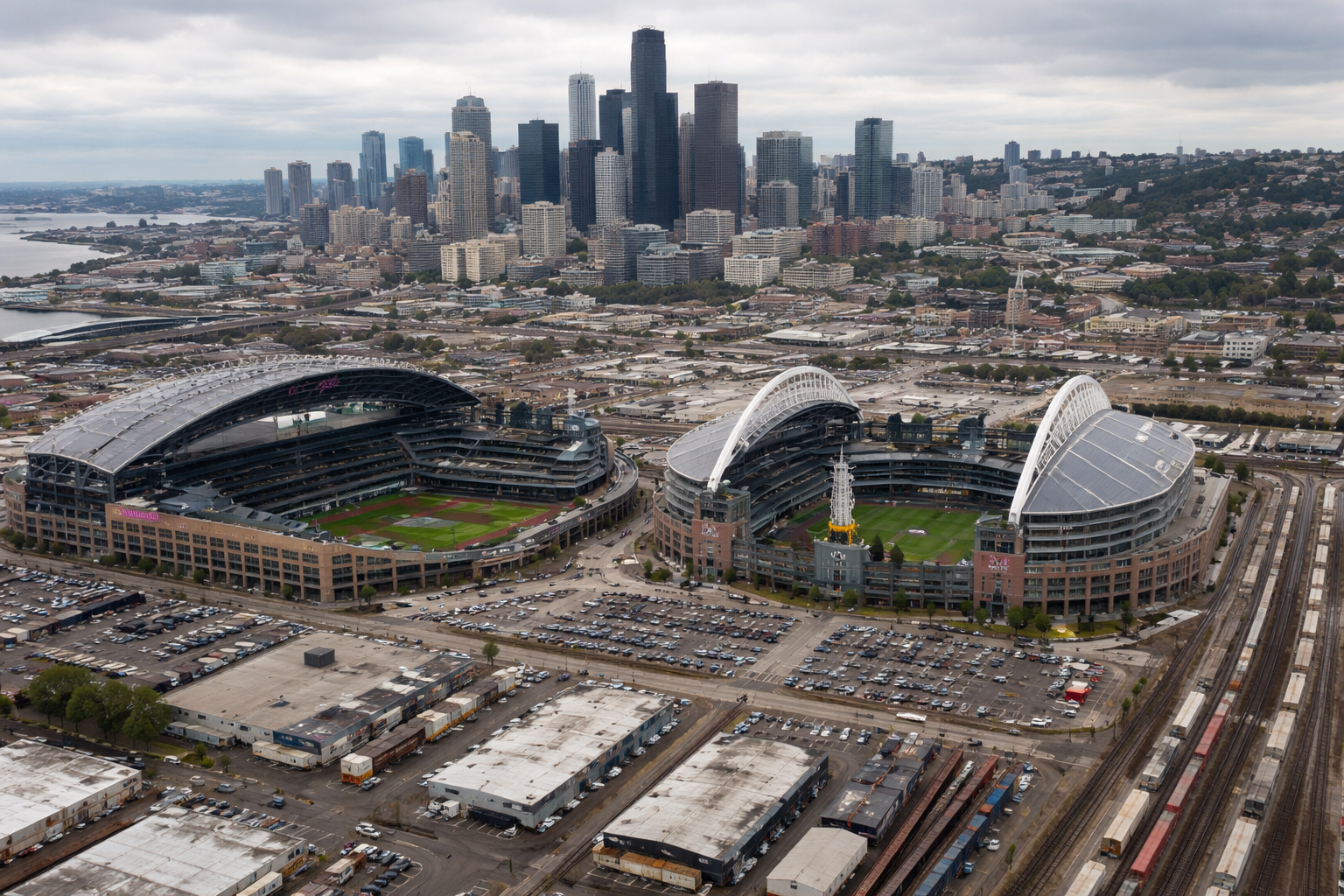
On a weekday morning in SODO, the freight trucks are already moving along 1st Avenue South, the coffee line at the Filson flagship store is two deep, and the warehouse murals of the SODO Track catch the early light. This SODO Seattle neighborhood guide is for the buyer who looks at that scene and sees something most people miss: a working district that is quietly becoming a place to live. SODO is not a leafy cul-de-sac, and it never will be. What it offers instead is access, character, and a front-row seat to a neighborhood in transition.
Here is the short version. SODO is Seattle's industrial and sports heart, located just south of downtown, where most homes are loft and condo conversions rather than houses. Buyers come for the transit, the stadium-district energy, and the chance to own in an area shifting from pure industrial toward mixed-use. It rewards people who value location and potential over square footage and yards.
What This SODO Seattle Neighborhood Guide Covers
SODO stands for South of Downtown, and the name tells you most of what you need to know about its place in the city. The district sits between Pioneer Square to the north and Georgetown to the south, with the Duwamish waterway and the Port of Seattle to the west. For decades it has been a place of warehouses, distribution centers, and logistics companies, not living rooms.
That history is exactly what makes SODO Seattle real estate interesting right now. As Seattle reworks its zoning and demand for centrally located housing keeps rising, the district has started to absorb a residential layer. Loft conversions, live-work units, and the occasional new building are appearing among the warehouses. For a buyer, this guide is meant to explain what living here actually looks like and who it suits.
I have spent more than 30 years helping people read South Seattle neighborhoods, and SODO is one of the most misunderstood. People drive through it on a game day and assume it is all parking lots and stadiums. The reality on the residential side is more nuanced, and worth a closer look.
The Industrial Roots Behind the SODO Seattle Neighborhood
To understand where SODO is going, it helps to know where it came from. The district grew up around rail lines, the port, and manufacturing, and those bones still shape the streetscape. Wide blocks, loading docks, and tall warehouse buildings give the area its distinctive look.
Some of that industrial heritage has become part of the neighborhood's identity. The Starbucks world headquarters occupies the beautifully restored 1912 Sears, Roebuck and Company catalog distribution building, a reminder that big things have always moved through here. The Georgetown Steam Plant sits on the district's southern edge as a National Historic Landmark.
Then there is the art. The SODO Track is more than two miles of murals by over 60 artists, completed in 2018 along the rail corridor. It is one of Seattle's largest outdoor art installations, and it turns an ordinary walk to the train into something memorable. That blend of working district and creative energy is the texture buyers are really buying into.
Where Residential Growth Is Happening in SODO
The residential story in SODO is one of conversion more than new construction. Most SODO homes for sale started life as something else: a warehouse floor reimagined as lofts, an industrial building turned into condos, a ground-floor space set up as live-work. The result is housing with high ceilings, large industrial windows, and open layouts that you rarely find in traditional neighborhoods.
Inventory is genuinely limited. SODO remains primarily industrial and commercial, so residential sales are sparse compared with a neighborhood like Columbia City or Beacon Hill. When a well-located loft does come up, it tends to draw attention from buyers who have been waiting specifically for this kind of space.
The growth, where it is happening, clusters near the transit spine and the stadium district. Proximity to the SODO Station, the SoDo Busway, and the energy around Lumen Field and T-Mobile Park makes those blocks the most natural fit for residential use. As mixed-use development continues, expect the strongest residential momentum to stay close to that core.
What Homes Cost in SODO Seattle
Pricing in SODO comes with a caveat, and it is an important one. Because residential sales are uncommon, the numbers describe a thin market rather than a busy one. The figures below give you a starting frame, not a precise appraisal of any single unit.
| Metric | SODO (est.) | What It Means for Buyers |
|---|---|---|
| Median home price | $550,000 | Entry point below many close-in neighborhoods, for a loft or condo rather than a house |
| Price per square foot | ~$450 | Open floor plans mean you pay for volume and light, not extra walls |
| Average days on market | ~35 | A slower pace than hotter neighborhoods, so there is room to think |
| Sale-to-list ratio | 98% | Well-priced units still sell close to asking |
Notice the days-on-market figure. At roughly five weeks, SODO moves more slowly than a 13-day neighborhood, which means a buyer here usually has time to tour, compare, and make a measured decision. That pace is one of the underrated comforts of shopping in this district.
Because comparable sales are so limited, I rely on a careful read of building type, finish level, and location rather than a quick glance at recent averages. For more on how the local market is moving, my breakdown of what SODO home prices reveal about South Seattle momentum adds useful context. Two lofts in the same area can justify very different prices depending on light, ceiling height, and walk time to the station.
If you are weighing a SODO purchase and want a clear-eyed sense of what a specific building supports, I am happy to pull the relevant comparables and talk it through. A short conversation often saves a buyer from overpaying or, just as often, from passing on a fair deal.
Getting Around: Transit and Access in SODO
If SODO has one defining advantage for residents, it is connection. This is one of the most accessible spots in the entire metro area, and for many buyers that single fact outweighs everything else. The neighborhood was built to move things, and that infrastructure now moves people just as well.
The SODO Station sits on Sound Transit's 1 Line, the same spine that runs from Northgate through the University of Washington, downtown, and on to Sea-Tac Airport. From SODO, downtown is roughly five minutes and the airport is about 25. The SoDo Busway layers in several Metro routes, and the I-5 and I-90 interchange plus SR 99 put the rest of the region within easy reach.
According to Walk Score, SODO carries a Transit Score of 64 and a Bike Score of 62. Those numbers describe a place where you can live comfortably without treating a car as the default, which is precisely what many of today's urban buyers are looking for.
Quick Facts: SODO at a Glance
- Location: South of Downtown, between Pioneer Square and Georgetown
- Home types: Lofts, condos, and live-work conversions
- Median price (est.): $550,000
- Transit Score / Bike Score: 64 / 62
- Anchors: T-Mobile Park, Lumen Field, SODO Track murals, Filson flagship
- School district: Seattle Public Schools (nearest schools in Beacon Hill and the International District)
Local Life Around the SODO Stadium District
Day-to-day life in SODO has a rhythm unlike anywhere else in the city. On game days, the district fills with tens of thousands of Mariners, Seahawks, and Sounders fans, and the streets hum with tailgating and pre-game energy. The rest of the time it settles into a working-district calm, which long-term residents come to appreciate.
The everyday amenities are more substantial than outsiders expect. The Filson flagship on 4th Avenue South pairs heritage retail with a cafe and workshop tours. Gastropod and the rotating food-truck lots feed the warehouse district at lunch. Breweries and tasting rooms keep popping up among the loading docks, and the SODO Costco is one of the highest-volume stores in the country, which tells you how much foot traffic moves through here.
For green space and movement, the SODO Trail connects toward Georgetown and the Duwamish River Trail, giving residents a genuine walking and cycling route out of the industrial core. Add the First Thursday art walk reaching into SODO galleries and the periodic SODO Flea Market, and you have a neighborhood with more texture than its zoning map suggests.
Who This SODO Seattle Neighborhood Guide Is For
SODO is not for everyone, and that is part of its appeal. The buyers who thrive here tend to share a few traits. They value being close to downtown and the airport over having a backyard. They like the idea of an open loft with character rather than a conventional floor plan. And they are comfortable in a place that is still mostly industrial, with all the honesty that brings.
Practically, that profile often means first-time buyers looking for a walkable entry point, downsizers who want low-maintenance living near the action, and investors who see the long arc of the district's transition. Families seeking a yard and a neighborhood school usually find a better fit in nearby Beacon Hill or Columbia City. Investors weighing the numbers may also want my guide to building long-term wealth through SODO investment property.
The investment case deserves its own mention. As Seattle's zoning evolves and the One Seattle Plan keeps SODO in the conversation, early owners in loft and condo conversions are positioned for the upside of a neighborhood moving from pure industrial toward mixed-use. That is not a guarantee, but it is a thesis worth understanding before you buy.
Putting This SODO Seattle Neighborhood Guide to Work
SODO rewards buyers who understand what they are getting. You are trading the conventions of a residential neighborhood for access, character, and a stake in a district still defining itself. For the right person, that trade is a good one, and the limited inventory means the right unit is worth acting on when it appears.
My approach is to help you separate the genuine opportunities from the units that only look good on a listing screen. That means walking the block, checking the real distance to the SODO Station, and reading the building against what little comparable data exists. In a thin market, that local read is the difference between a confident purchase and a guess.
I have spent decades watching South Seattle neighborhoods change, and SODO is one of the most interesting transitions underway. If you can see the residential future inside this industrial present, it may be exactly the kind of place that fits the life you are building.
Frequently Asked Questions
Is SODO Seattle a good neighborhood to buy a home in?
SODO works well for buyers who want a walkable, transit-first location near downtown and are comfortable with a district that is still mostly industrial. Most residential options are lofts, condos, and live-work units rather than single-family houses, so it suits first-time buyers, downsizers, and investors more than families seeking a yard.
What kind of homes are available in SODO Seattle?
SODO has limited residential stock, and what exists is mostly loft conversions, condos, and live-work units carved out of former warehouse and industrial buildings. Expect high ceilings, large windows, and open floor plans rather than traditional layouts. New residential inventory appears slowly as the district shifts toward mixed-use.
How much do homes cost in SODO Seattle?
Residential prices in SODO run around a median of $550,000, though sales are sparse because the district is primarily industrial and commercial. Price per square foot sits near $450. Because comparable sales are limited, an individual market analysis matters more here than in a neighborhood with steady turnover.
Is SODO Seattle well connected for commuters?
Yes. The SODO Station on Sound Transit's 1 Line reaches downtown in about five minutes and Sea-Tac Airport in roughly 25. The SoDo Busway adds several Metro routes, and the I-5 and I-90 interchange plus SR 99 put most of the region within easy reach. SODO carries a Transit Score of 64.
What is there to do in SODO Seattle?
SODO is Seattle's sports and creative district, anchored by T-Mobile Park and Lumen Field. Residents have the SODO Track murals, the Filson flagship store, breweries and tasting rooms, the SODO Trail toward Georgetown, and one of the busiest Costco locations in the country, all within the neighborhood.
Is SODO Seattle a good investment for the future?
Many buyers view SODO as a long-term play. As Seattle zoning evolves and the district moves from pure industrial toward mixed-use, early owners in loft and condo conversions may benefit from the transition. The location near transit, the port, and the stadiums supports steady demand even with limited residential supply.